Topic guide
Interior Wall Finishes and Surfaces
Interior finishes are chosen late, changed often, and judged constantly — they are the part of a building people touch. This guide covers the main families of interior wall finish, what each one demands from its substrate, how they behave in wet and high-traffic areas, and how to make a feature wall look deliberate rather than applied.
The families of interior wall finish
Interior finishes divide usefully by how they are applied and what they demand of the wall behind them.
Use this editorial checklist to ask about the selected system, rather than treating a material family as a performance specification.
Swipe sideways to see the other columns. The first column stays visible.
| Finish family | Substrate check | Location check | Maintenance check |
|---|---|---|---|
| Wet-applied: plaster, skim, microcement | Confirm preparation and treatment of movement | Is the complete system approved for the room’s exposure? | How is a patch matched; what care does the sealer need? |
| Sheets or panels: timber, laminate, mineral, acoustic | Confirm backing, flatness and fixing or adhesive | Do the joints and edges suit contact and cleaning? | Can one panel be removed and replaced? |
| Units: tile, stone, brick slip, veneer | Confirm support, bonding and movement details | In wet areas, check the waterproofing system behind the finish | Record joint, grout and sealant care |
| Coatings: paint and decorative coatings | Confirm a sound surface and compatible primer | Check the coating’s documented cleaning and exposure limits | Record preparation and colour matching for recoating |
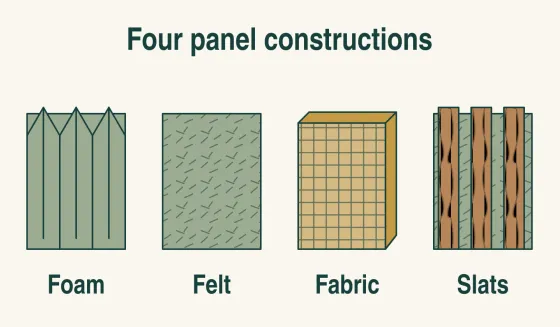
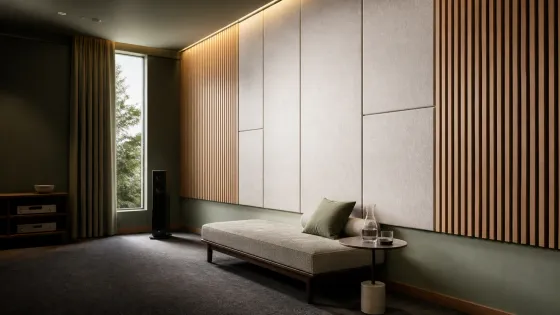
For sound-absorbing finishes, compare foam, felt, fabric-wrapped and wood-slat acoustic wall panels with the tested construction and mounting beside each performance figure.
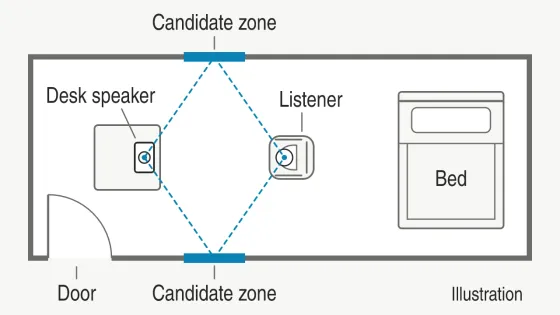
Once the material is shortlisted, use the bedroom and office acoustic-panel placement guide to map candidate reflection zones, record coverage and check the mounting and removal conditions before installation.
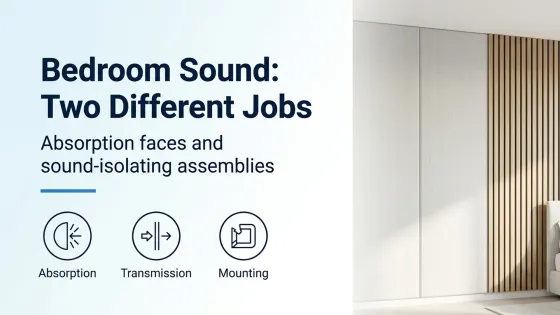
For noise from an adjacent room, compare bedroom soundproof wall panels versus acoustic absorption before choosing between a surface finish and a separating-wall assembly.
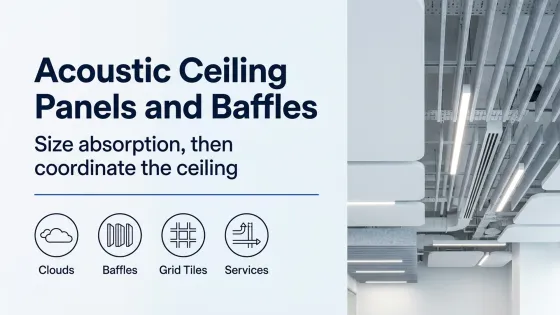
Where walls offer limited treatment space, select acoustic ceiling panels and baffles against an absorption budget and a layout coordinated with lights, diffusers and sprinklers.
Substrate is usually the deciding factor
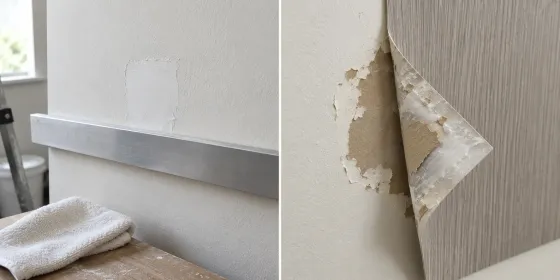
Substrate condition can rule out a finish before appearance does. Check unevenness, movement and the selected system’s support requirements. In renovation, record the existing wall condition before shortlisting finishes.
Ask what the wall is, how flat it is, how much it moves, and how much weight it can carry — before choosing what goes on it.
Wet and high-traffic areas
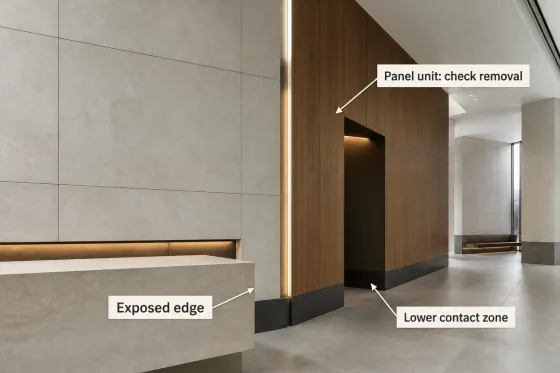
In wet areas, check the complete waterproofing system, including joints and penetrations, rather than relying on the finish face alone. Use the moisture-resistant wall finishes guide to separate decorative surfaces from wet-area construction. In high-traffic areas — corridors, lobbies, retail — include expected contact and local repair in the shortlist alongside fire, cleaning and appearance requirements.
For a public or commercial interior, use the commercial wall-material decision guide to compare location, substrate, cleaning and repair requirements before requesting product documents.
Feature walls that read as deliberate
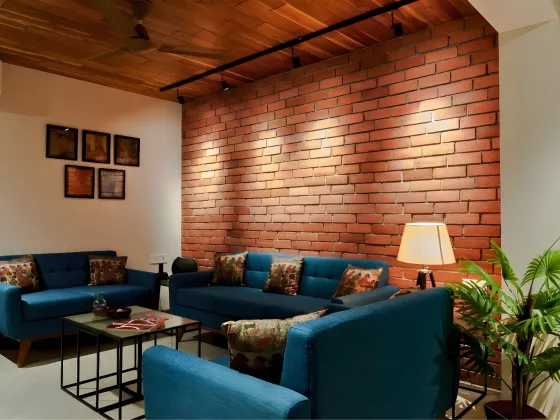
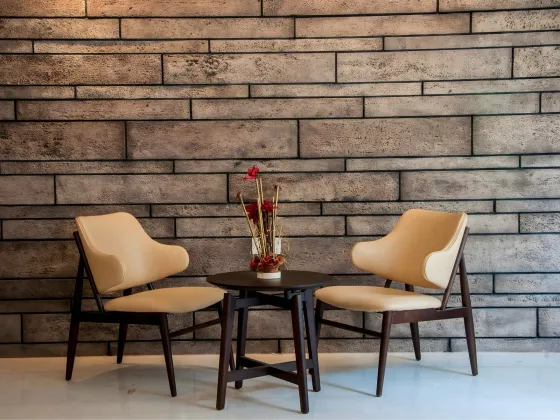
A feature wall works when its extent is defined by the architecture — it stops at a structural line, a change of plane, or a full wall face — and fails when it stops arbitrarily in the middle of a surface. Texture reads at a distance; fine detail does not. And a feature wall in a room with no other restraint is not a feature, just more noise.
In this topic