
Texture is a lighting decision
Approving texture under different lighting from the finished room can produce an unwanted result. A lighting manufacturer’s public guidance describes grazing light as shallow-angle illumination that emphasises surface structure. That supports comparing light directions, not a claim that frontal light makes all texture invisible.
- Grazing light — compare the shadows and any highlighted joints or unevenness.
- Frontal light — check whether colour, gloss and relief still give the intended appearance.
- Side daylight — repeat the review at the times the room is used.
Takeaway: Agree the lighting and sample together.
Match relief depth to viewing distance
Use the same sample at a close inspection position and at the normal room position. These are editorial review conditions, not visibility thresholds or test results.
| Review condition | Record on your sample notes |
|---|---|
| Close view, frontal light | Distance, lamp position, visible grain and gloss: ____ |
| Close view, grazing light | Same distance; shadows and joints: ____ |
| Normal room view, frontal light | Distance and whether the intended pattern remains legible: ____ |
| Normal room view, grazing light | Same room position; acceptable contrast and unevenness: ____ |
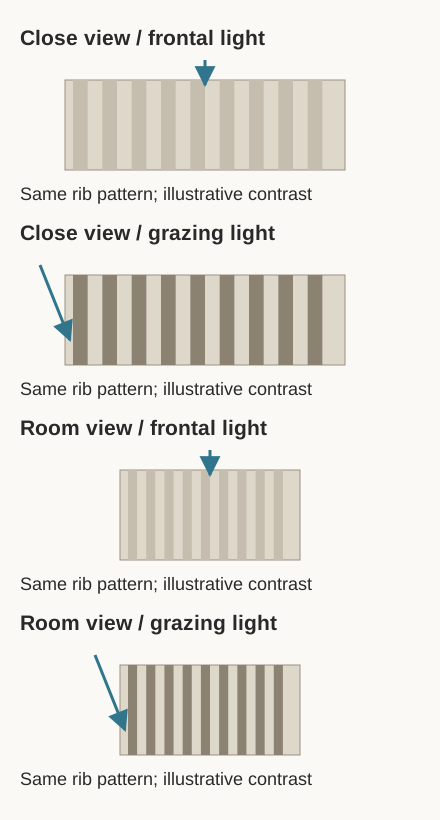
Common mistake: Approving a hand sample without looking from the normal room position.
Takeaway: Record viewing distance rather than selecting relief from an unsupported millimetre rule.
The families
Wet-applied seamless — microcement, polished plaster, tadelakt, textured render. No joints, so no joint pattern to design. Confirm permitted substrates, movement-joint treatment and any required sealer for the selected product. A microcement manufacturer’s public instructions require substrate preparation and sealing for its documented system; those instructions do not apply to every plaster or coating.
Applied relief panels — timber slat, fluted MDF, moulded mineral or composite panels. Check the fixing method and relief on the selected panel. Introduces a joint and module pattern, which is a design decision whether or not you make it deliberately.
Unit-based — split-face stone, brick slip, textured tile. Check individual-unit geometry, bond or fixing details and the joint maintenance requirements.
Coatings — textured and sand-loaded paints, limewash. Compare actual cost, relief and recoating instructions rather than assigning the whole family a rank.
What the substrate decides
Establish wall construction, flatness, movement and load capacity before shortlisting:
- Check panel tolerances and joints under the proposed raking light.
- Confirm the wet-applied system’s compatible substrate and movement-joint details.
- Confirm the load path and approved adhesive or fixings for unit finishes.
See feature wall materials compared for the wider shortlist. For a sound-control aim, use acoustic wall treatments and check the complete tested build-up; texture alone is not an acoustic specification.
Takeaway: Ask for installation evidence matching the actual wall.
Where texture is the wrong choice
Treat these as reasons to review the sample more closely, rather than automatic exclusions:
- High-touch or frequently cleaned walls: try the approved cleaning method on the sample.
- Wet areas: confirm the complete system for the actual water exposure.
- Competing surfaces: judge the texture alongside flooring and joinery.
- Fixed frontal lighting: approve under that lighting, rather than assuming a grazing-light result.
Takeaway: Reject a finish when its documented use or sample review cannot meet the room’s needs.
Deciding
Keep this self-use record with the accepted sample:
| Check | Project record |
|---|---|
| Lighting and viewing | Lamp type, position, direction; viewing distances; daylight review time: ____ |
| Substrate and movement | Wall construction, preparation, fixing or bonding details: ____ |
| Cleaning and sealing | Approved method, trial result, sealer and maintenance document: ____ |
| Fire evidence | Report reference, tested build-up and applicable local requirement: ____ |
| Approval | Sample reference, acceptable variation and unresolved items: ____ |
Takeaway: Close the unresolved items before accepting the installation sample.
For the broader families, see the interior wall finishes guide, and interior architecture vs interior design for when to settle substrate decisions.
Evidence note: the lighting definition and microcement instructions are manufacturer public information, not our measurements or a product recommendation. Both are listed in the sources; neither establishes a universal viewing threshold.
Frequently asked questions
Why does my textured wall look flat?
Compare frontal and grazing light on the same sample first. Lighting angle can change the shadows, but colour, gloss and relief also affect what you see. Approve the result under the intended installation lighting.
Is microcement suitable for a bathroom?
Check the selected system documentation for the intended wet exposure, substrate, waterproofing and sealer. A decorative microcement name alone does not establish suitability for a shower or prolonged water contact.
How much texture is too much?
Compare the wall sample with the actual flooring, joinery and lighting. Our editorial suggestion is to try one dominant surface first; it is a composition choice rather than a technical limit.
Does texture help acoustics?
Do not infer acoustic performance from visible texture. Request an absorption or scattering report for the complete proposed build-up, including backing and mounting. The acoustic wall treatments guide explains which installation conditions to check.
Sources
- Noise control — sound absorption — Australian Government, Your Home Accessed October 8, 2026.
- Grazing light — glossary definition (manufacturer public information, not a recommendation) — ERCO Accessed October 8, 2026.
- Ready-to-use microcement — preparation and sealing instructions (manufacturer public information, not a recommendation) — Topciment Accessed October 8, 2026.