Topic guide
Building Materials and Finishes
Material selection is a decision about consequences you will live with for decades — how the building looks in year one, how it looks in year fifteen, what it costs to maintain, and what happens when a panel needs replacing. This guide covers the criteria that actually govern the choice and how to compare candidates without collapsing everything into price.
Selection is a constraint problem, not a preference
Screen the application, environment and substrate before comparing appearance, so unresolved installation constraints do not reopen the shortlist.
A workable order:
- Define the application precisely. “Exterior wall” is not a specification. Which elevation, what exposure, what height, what substrate, what fire requirement.
- Apply the hard constraints. Fire class, weight limit, structural capacity, code and approval requirements. Confirm the applicable project requirements.
- Apply the durability constraints. UV, moisture, freeze-thaw, impact, chemical exposure.
- Compare the survivors on maintenance and installation, not just on supply cost.
- Then choose on appearance from what is left.
| Selection record | Your notes |
|---|---|
| Application | Location, height/use and required function: ____ |
| Exposure | Rain, sun, temperature, impact and cleaning: ____ |
| Substrate | Construction, condition, fixing/bonding and load limits: ____ |
| Evidence | Product/version, report scope, tested build-up and maintenance: ____ |
| Unknowns | Missing evidence, responsible person and decision date: ____ |
Use how architects select building materials to compare your shortlist with these constraints.
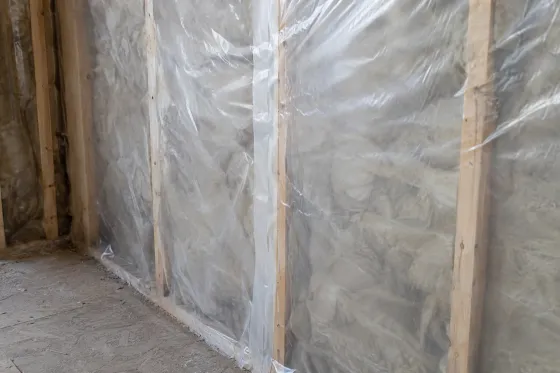
For membranes and facings, compare vapor barriers and vapor retarders using the test conditions, intended application and drying route of the complete assembly. Its material–assembly checklist keeps those inputs together before a product is selected.
Natural and engineered are not a quality ranking
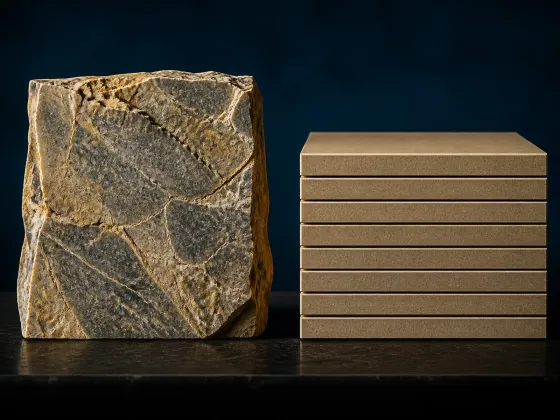
Natural materials — stone, timber, brick — have variation built in. That variation is often the reason to use them, and it is also a supply and matching problem: batches differ, later replacement pieces may not match, and performance varies within a single quarry or forest.
Engineered materials — fibre cement, porcelain, composite panels, laminates — can offer documented consistency for a specified product. Replacement still depends on continuing supply of the same format, finish and compatible system; confirm availability and batch matching rather than assuming replacement is easier.
Neither category alone establishes durability; compare product evidence and detailing.
Comparing candidates honestly
Compare candidates for the same application, exposure, substrate and maintenance needs. Avoid unqualified quality rankings.
Two rules for any comparison table you build or read:
- Every performance figure needs its test condition. A weight per square metre is meaningless without a thickness. A fire class is meaningless without the standard it was tested to and the assembly it was tested in.
- An empty cell is more honest than an estimate. If nobody has the number, say so.
Samples do not tell you what you think they do
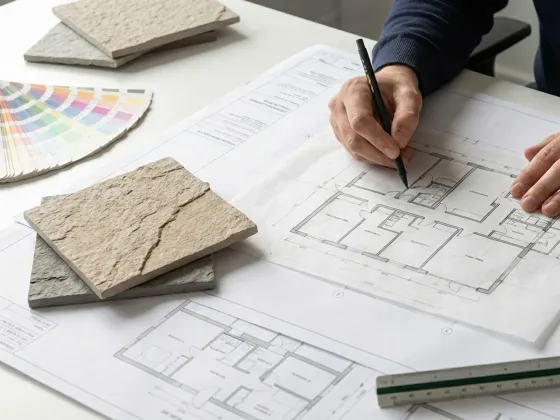
A small sample — for example, 100 mm across, an illustrative size rather than a standard — does not establish how a material reads across a whole elevation, how it looks in the building’s actual light, or how the joints will pattern. Larger samples, viewed at distance, in situ, at the times of day the building will be seen, resolve arguments that renders and swatches cannot.
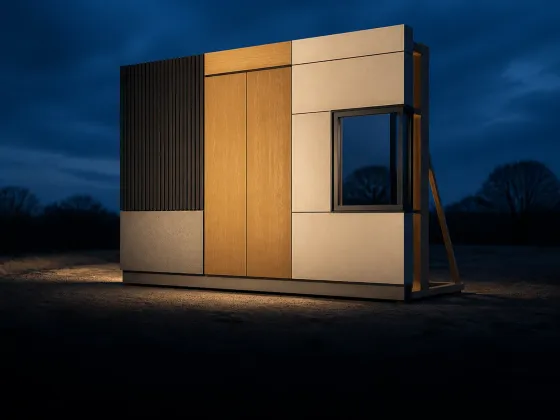
Use material samples and mockups to plan the viewing conditions.
Method: the five steps and blank record are editorial tools. WBDG Materials supports assessing functional demands, climate and assemblies (accessed 8 October 2026); it does not establish product equivalence or replacement availability.
In this topic