
What changes at the wall line
Use the actual location and product documents, rather than an indoor/outdoor label alone.
Swipe sideways to see the other columns. The first column stays visible.
| Check | Exterior / interior exposure to record | Evidence to inspect |
|---|---|---|
| Sunlight | Exposed elevation / sunlit window-side finish | Product and coating light-exposure limits |
| Water and humidity | Rain / splashing, wet rooms or pools | Intended-use statement; moisture and adhesive limits |
| Temperature | Climate / heated, refrigerated or unconditioned room | Permitted service range and movement detail |
| Loads | Wind and self-weight / self-weight and impact | Fixing design; substrate assessment |
| Emissions | Exterior rating does not establish indoor use | Indoor-use guidance; emissions evidence for coatings and adhesives |
| Fire | External wall / interior lining | Evidence accepted for that use and jurisdiction |
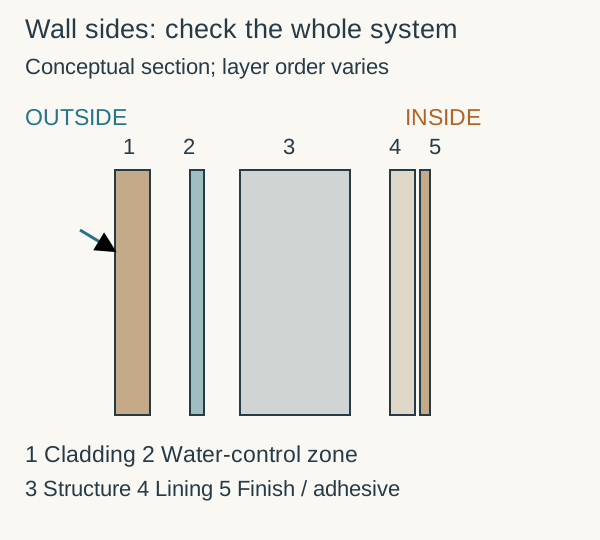
Takeaway: Record exceptions such as sunlit glazing, wet rooms and unusual indoor temperatures.
Interior materials outdoors: what to check
Without evidence for outdoor exposure, hold the product off the shortlist. Check UV, wetting and drying, freeze-thaw where relevant, and movement of the complete finish and adhesive system. No general number of seasons to failure is supported here.
Takeaway: An indoor application statement is not evidence for outdoor service.
Exterior materials indoors: verify each requirement
Confirm indoor intended use, finish and adhesive emissions, interior fire classification and the capacity of the receiving wall. Then compare thickness, viewing distance and installation needs.
EPA lists building materials, paints and adhesives among possible indoor VOC sources. Use that guidance to check the complete system; it does not classify all exterior materials as hazardous.
Takeaway: Keep emissions and fire checks separate from weather resistance.
The sheltered-outdoor trap
Covered balconies, deep loggias, carports and open-sided rooms are the most common place this goes wrong, because they feel interior. They are not. They still see:
- Wide temperature swings, including surface temperatures well above air temperature.
- Humidity tracking the outdoor air.
- Wind-driven rain at the edges, and sometimes throughout.
- Reflected UV, even where direct sun does not reach.
Specify these as exterior, then check the manufacturer’s guidance for sheltered exposure — some products have separate requirements or warranties for it.
How to check properly
- Find the manufacturer’s technical data sheet for the specific product and finish, not the family.
- Look for an explicit exterior-use statement, including any exposure limits.
- Check the substrate and fixing requirements for the intended use — they frequently differ between interior and exterior applications of the same product.
- Confirm the fire classification for the actual use, as an external wall component or an internal lining, in your jurisdiction.
- Check the warranty terms, which often exclude uses the product is technically capable of.
If the data sheet does not say a product is suitable for exterior use, treat that as a no. Absence of a prohibition is not a permission.
For the wider selection process, see how architects select building materials and natural vs engineered building materials, both in the building materials and finishes guide. For the exterior side in detail, see exterior wall cladding materials compared.
Frequently asked questions
Can I use exterior cladding inside?
Only after confirming indoor use, emissions from the complete finish and adhesive system, applicable interior fire requirements and substrate capacity. EPA identifies building materials, paints and adhesives as potential indoor VOC sources; that does not mean every exterior product is harmful.
Why do interior materials fail outdoors?
Chiefly UV degradation, water absorption with repeated wetting and drying, and thermal movement across a much wider temperature range than an interior product is engineered for. The mechanism and time to damage depend on the product and exposure; no general failure period is established here.
What about a covered outdoor area — is that interior or exterior?
Exterior. Sheltered locations still see wide temperature swings, humidity, wind-driven rain and often UV. Specify for exterior use and check the manufacturer's guidance for sheltered exposure.
Does a bathroom count as a wet exterior condition?
No. Bathrooms are an interior wet condition. Check splashing, humidity, any window-side sunlight and the actual temperature range rather than assuming all indoor rooms have the same exposure. Products for wet interiors and products for exterior exposure are specified separately.
Sources
- Building Envelope Design Guide — Whole Building Design Guide, National Institute of Building Sciences Accessed August 27, 2026.
- Volatile Organic Compounds and Indoor Air Quality — US Environmental Protection Agency Accessed October 8, 2026.