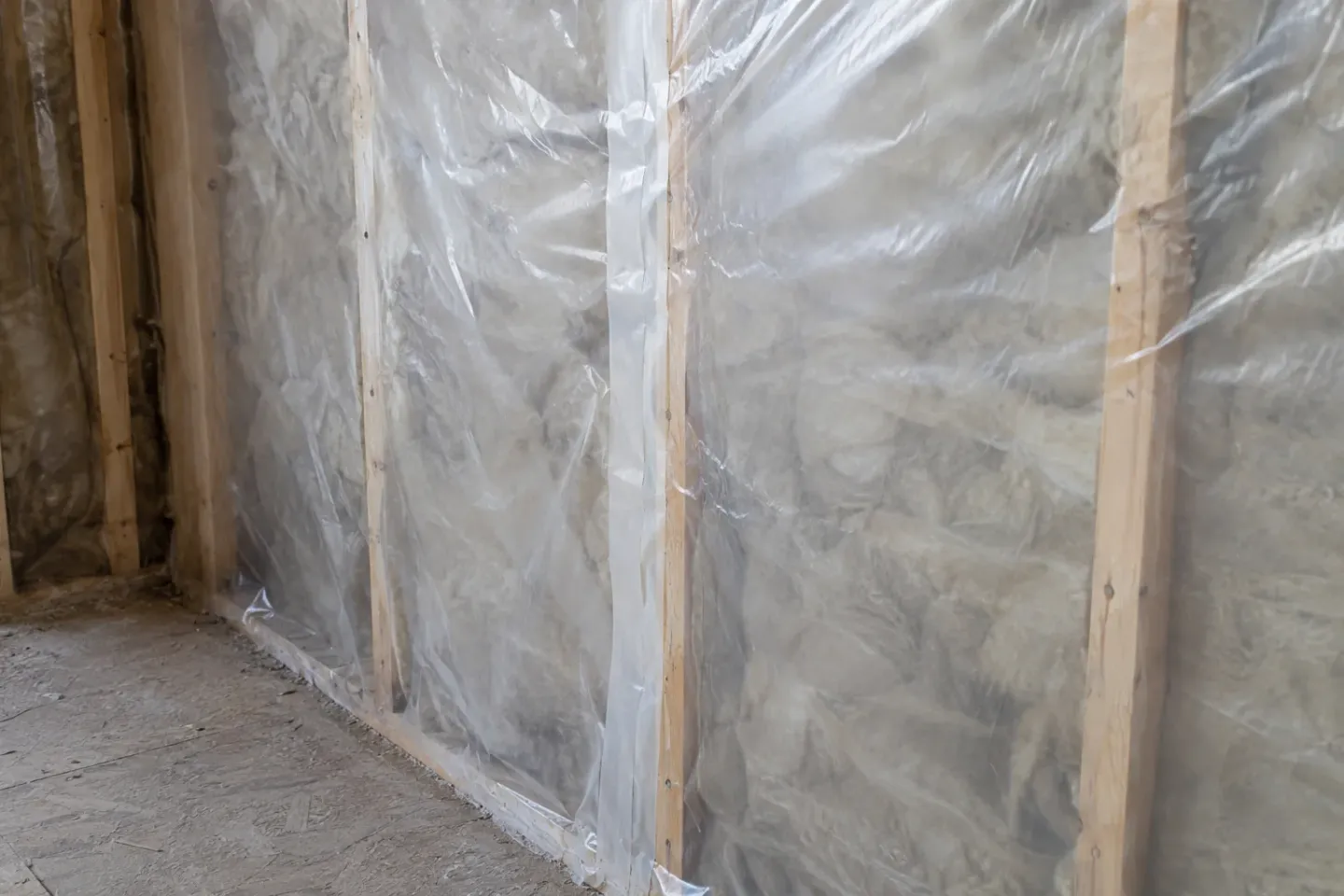
Start with the rating, then the assembly
Choosing a membrane by its name alone can close off a wall’s drying path. A vapor barrier is commonly the lowest-permeance type of vapor retarder; neither label tells you whether it belongs in a particular wall, roof or floor.
Use this comparison when a drawing or product sheet says “barrier” or “retarder” and you need to establish what the claim means. The output is a material–assembly record for the designer, rather than a universal instruction to put plastic on one side of insulation.
Swipe sideways to see the other columns. The first column stays visible.
| Check | Evidence to read | Decision it supports |
|---|---|---|
| Vapor control | Permeance, units and test conditions | How strongly the tested material resists diffusion |
| Air control | Air leakage evidence and connection details | Whether the installed system controls moving air |
| Application | Wall, roof or under-slab scope | Whether the document addresses the proposed use |
| Other layers | Facings, finishes, insulation and cladding | Where drying may be restricted |
| Project conditions | Climate, indoor conditions and adopted code edition | Which assembly requirements need review |
What Class I, II and III mean
Building Science Corporation’s BSD-106, effective April 2011, uses the following classification with ASTM E96 Method A, the desiccant or dry-cup method, as its test basis. These are terminology thresholds in that source, not measured values for the materials photographed here.
Swipe sideways to see the other columns. The first column stays visible.
| Classification | Water vapor permeance, US perms | Meaning in this comparison |
|---|---|---|
| Class I | 0.1 or less | The category BSC calls a vapor barrier |
| Class II | Greater than 0.1 and no more than 1.0 | More diffusion is possible than through Class I under the same test basis |
| Class III | Greater than 1.0 and no more than 10 | Less restrictive vapor control within this classification |
| Vapor permeable | Greater than 10 | Outside those three vapor retarder classes |
The boundaries matter: 0.1 belongs to Class I; 1.0 belongs to Class II; 10 belongs to Class III. A lower permeance means stronger resistance to diffusion under the stated conditions, not a universally better assembly.
BSC’s September 2009 Info-310 lists polyethylene sheet and aluminum facing as Class I examples, kraft-faced fiberglass as a Class II example, and some paints as Class III examples. Treat these as material-family examples. Obtain the proposed product’s report, including its facing and thickness, before assigning it a class.
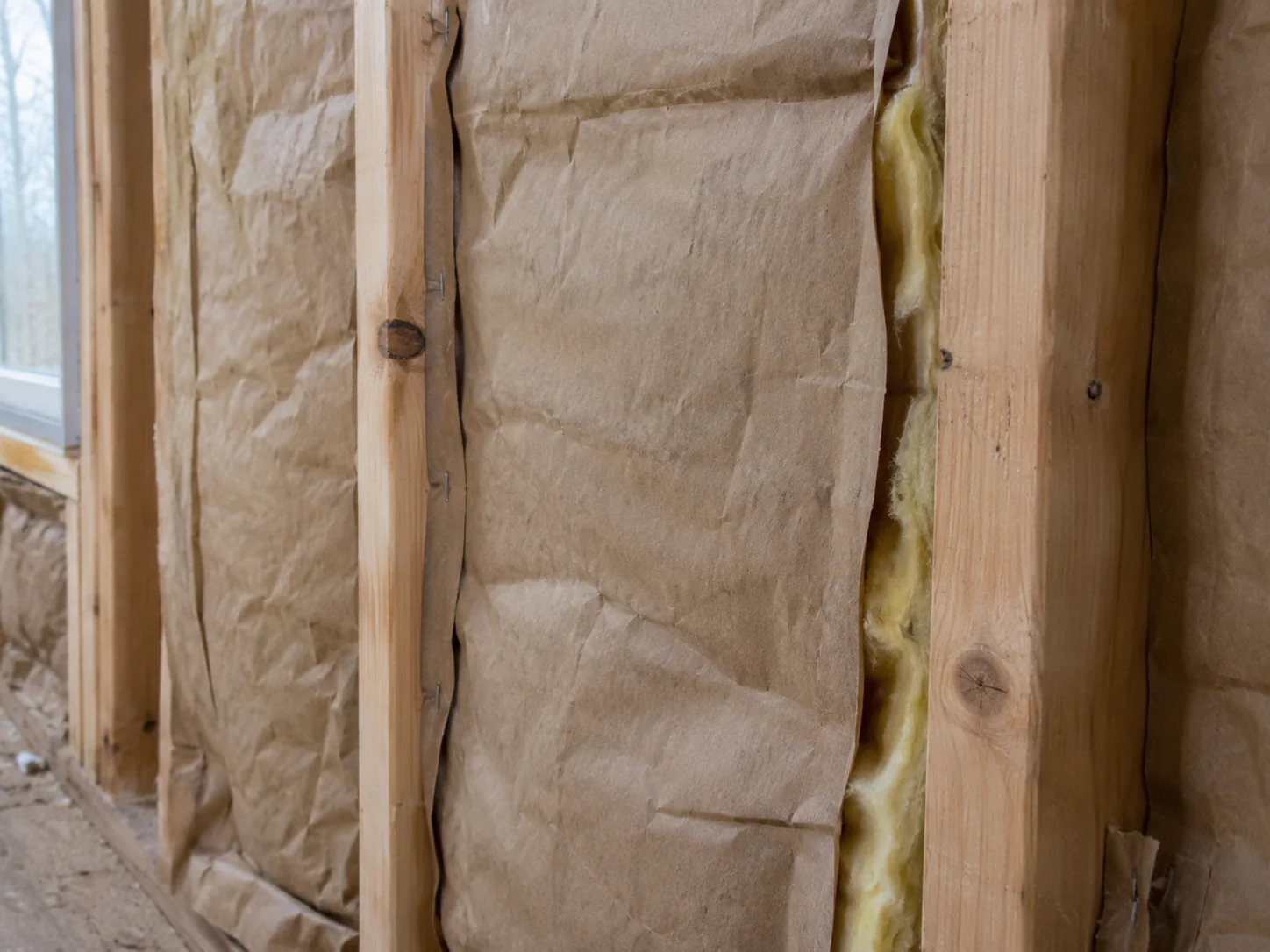
Read beyond the perm number
The public ASTM E96/E96M-24 summary distinguishes desiccant and water methods and warns against predicting results across different methods or conditions. A dry-cup result and a wet-cup result should therefore retain their separate labels when you compare documents.
Record the report number and date, standard edition, method, temperature, humidity on each side, specimen thickness and facing. Keep the original units beside the result. Do not compare bare numbers labeled only “perm,” mix US and SI unit conventions, or substitute a water vapor transmission rate for a permeance value.
If a product advertises variable vapor resistance, obtain its results across the claimed humidity conditions and its permitted assembly uses. A single favorable number does not document that behavior over the whole operating range. Leave missing fields Unknown — obtain report.
Example of a document mismatch: one sheet reports a dry-cup permeance while another gives a wet-cup result without the humidity conditions. Record both claims, but leave the equivalence decision open. A thickness comparison cannot resolve the missing test information.
Vapor barrier vs air barrier: two evidence questions
Diffusion moves water vapor through a material. Air leakage carries moisture with moving air through openings and joints. BSD-106 distinguishes these transport mechanisms; evidence for one does not establish performance against the other.
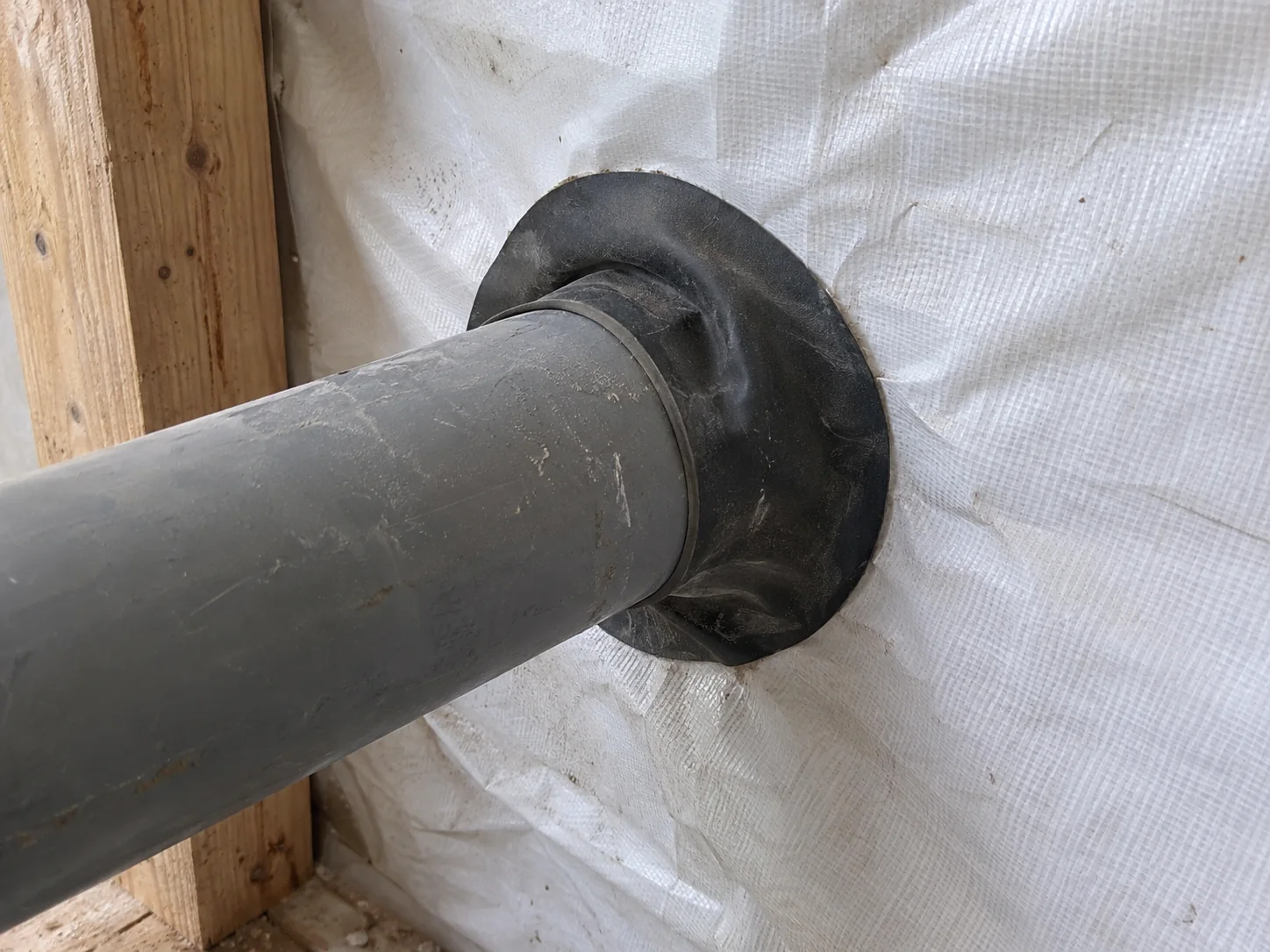
An air barrier is an installed system of connected materials. SPRI’s April 2018 guidance emphasizes continuity, joints, penetrations and transitions. A membrane can perform both duties where the material evidence and installed details support both. Calling it a vapor barrier does not document those connections.
For a proposed dual-purpose layer, ask two separate questions:
- What report supports its water vapor permeance under the specified conditions?
- What evidence and details support air control at laps, edges, openings and adjoining assemblies?
A photograph can show an accessible junction. It cannot establish a membrane’s perm rating or verify the airtightness of the finished building.
Keep wall, roof and under-slab claims separate
The same vocabulary appears in documents written for different exposures. Preserve that application scope before transferring a recommendation.
Swipe sideways to see the other columns. The first column stays visible.
| Proposed use | Relevant source scope | What to resolve for the project |
|---|---|---|
| Above-grade framed wall | BSC Info-310 addresses wood framing and conditions typical of residential occupancy | Indoor humidity, climate, exterior insulation, facings and available drying direction |
| Low-slope roof | SPRI discusses vapor control alongside roof air barrier continuity | Complete roof build-up, indoor humidity, deck and insulation position, and transition details |
| Beneath a concrete slab | ASTM E1745-17’s public scope addresses plastic sheet retarders in contact with soil or granular fill below slabs | Specified edition, material test evidence, construction durability and installation requirements |
The E1745-17 public abstract includes permeance, tensile strength and puncture resistance. A low perm number alone does not document the other properties. Its material classes also belong to that specification; do not read an under-slab Class A claim as the Class I/II/III terminology above.
ASTM E1643-24 addresses selection, design, installation and inspection beneath slabs. Product qualification and installation review are separate records. Neither under-slab document supplies a general exterior-wall layer sequence.
Why “always put it on the warm side” is incomplete
The missing question is: warm under which operating conditions, with which other layers? BSC’s guidance considers climate, indoor conditions and assembly materials together. An interior low-permeance layer can restrict inward drying; another restrictive layer outside can leave moisture-sensitive components with limited drying options.
Info-310 specifically warns about interior Class I or II layers in hot-humid framed walls. It also discusses cold-climate alternatives involving exterior insulation and cladding. Those conditional examples do not establish permission for an unknown project. Its 2009 code discussion is historical guidance, so confirm the locally adopted edition and amendments separately.
Before adding a layer during a retrofit, record existing foil facings, foam, membranes and interior finishes as well as the proposed product. Ask the designer to identify how the vulnerable layers can dry. Where the answer depends on seasonal conditions or an unusual build-up, obtain an assembly assessment rather than selecting the lowest perm number.
Pools, cold storage and other spaces with special interior conditions need their own assessment. Ordinary residential guidance does not settle them. This comparison also cannot identify the cause of dampness in an existing building.
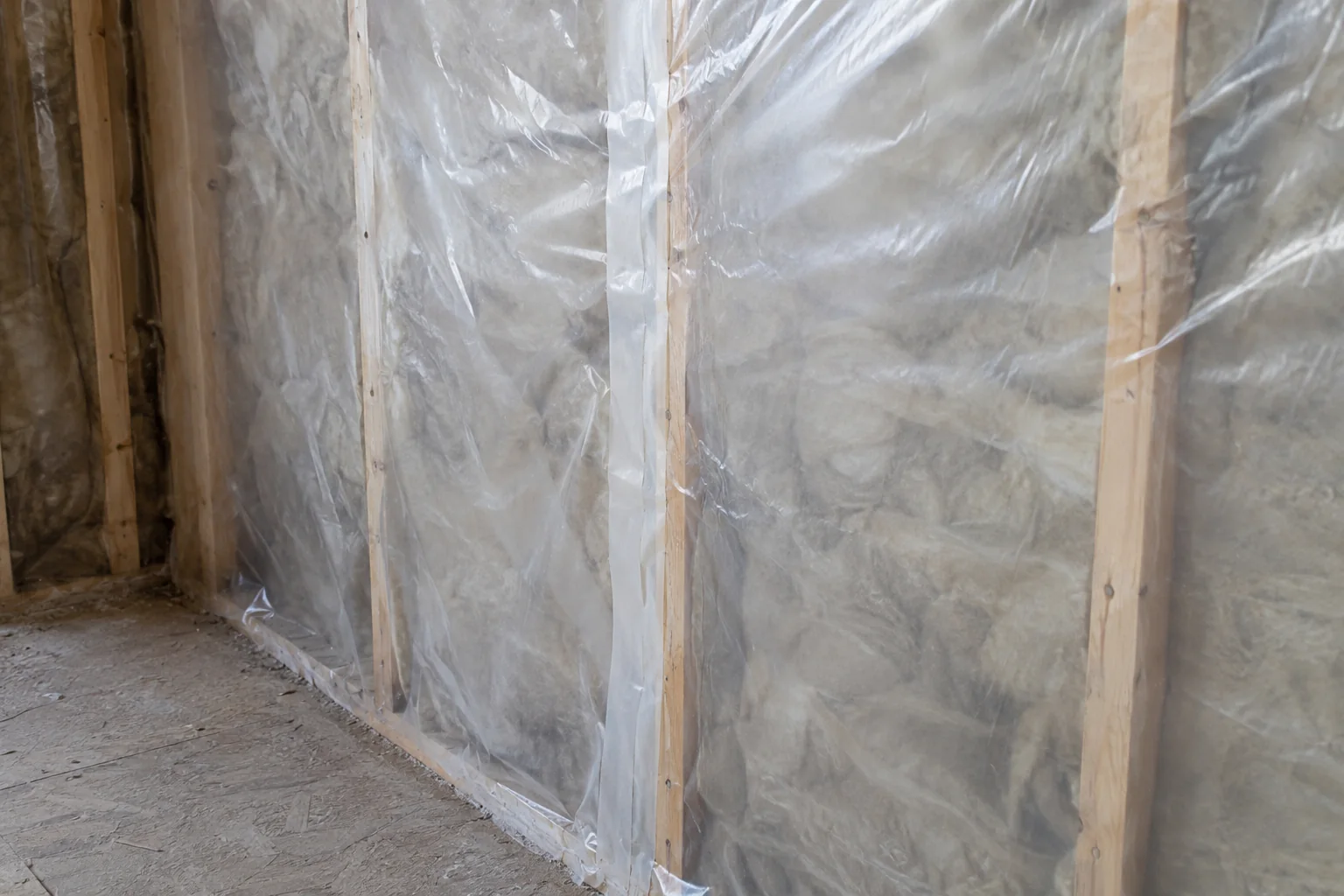
Copy this material–assembly checklist
Complete one record for each candidate and attach the relevant report and section drawing. This is an editorial review aid, not a compliance certificate. Keep unknown entries visible until someone resolves them.
Swipe sideways to see the other columns. The first column stays visible.
| Field | Your record | Question for review |
|---|---|---|
| Material claim | Product/version, barrier or retarder wording: ____ | What exact property is claimed? |
| Report and conditions | Report ID/date, method/edition, temperature and humidity conditions: ____ | Does the report support the claim being compared? |
| Permeance and units | Result, original units, specimen thickness/facing: ____ | Are the results on a comparable basis? |
| Intended location | Wall / roof / under slab; drawing reference: ____ | Does the evidence cover this application? |
| Layers on both sides | Finishes, membranes, insulation/facings, substrate and cladding: ____ | What else restricts diffusion? |
| Drying route | Intended inward/outward route and limiting layers: ____ | How can moisture-sensitive components dry? |
| Air barrier duty | Assigned layer, evidence and junction details: ____ | Is air control separately documented? |
| Climate and code | Project location, indoor conditions, adopted edition/amendments: ____ | Which requirements has the designer verified? |
| Resolution owner | Missing information, responsible person, decision/date: ____ | Who closes each unknown before selection? |
For a broader shortlist, use how architects select building materials. Return to the building materials guide to keep substrate, exposure and installation constraints alongside the vapor-control record.
Method and limits: Sources were accessed on 16 October 2026. This comparison uses BSC’s published terminology, SPRI’s roof-system discussion and the identified ASTM editions’ public summaries. Full standards and project-specific test reports were not reviewed. The checklist organizes unresolved evidence; it supplies no tested assembly, moisture simulation or finding of local code compliance.
Sources
- BSD-106: Understanding Vapor Barriers — effective April 2011 — Building Science Corporation Accessed October 16, 2026.
- Info-310: Vapor Control Layer Recommendations — September 2009 — Building Science Corporation Accessed October 16, 2026.
- ASTM E96/E96M-24 — public scope and significance — ASTM International Accessed October 16, 2026.
- ASTM E1745-17 — public scope and abstract — ASTM International Accessed October 16, 2026.
- ASTM E1643-24 — public scope — ASTM International Accessed October 16, 2026.
- Air Barriers and Vapor Retarders — April 2018 — SPRI Accessed October 16, 2026.