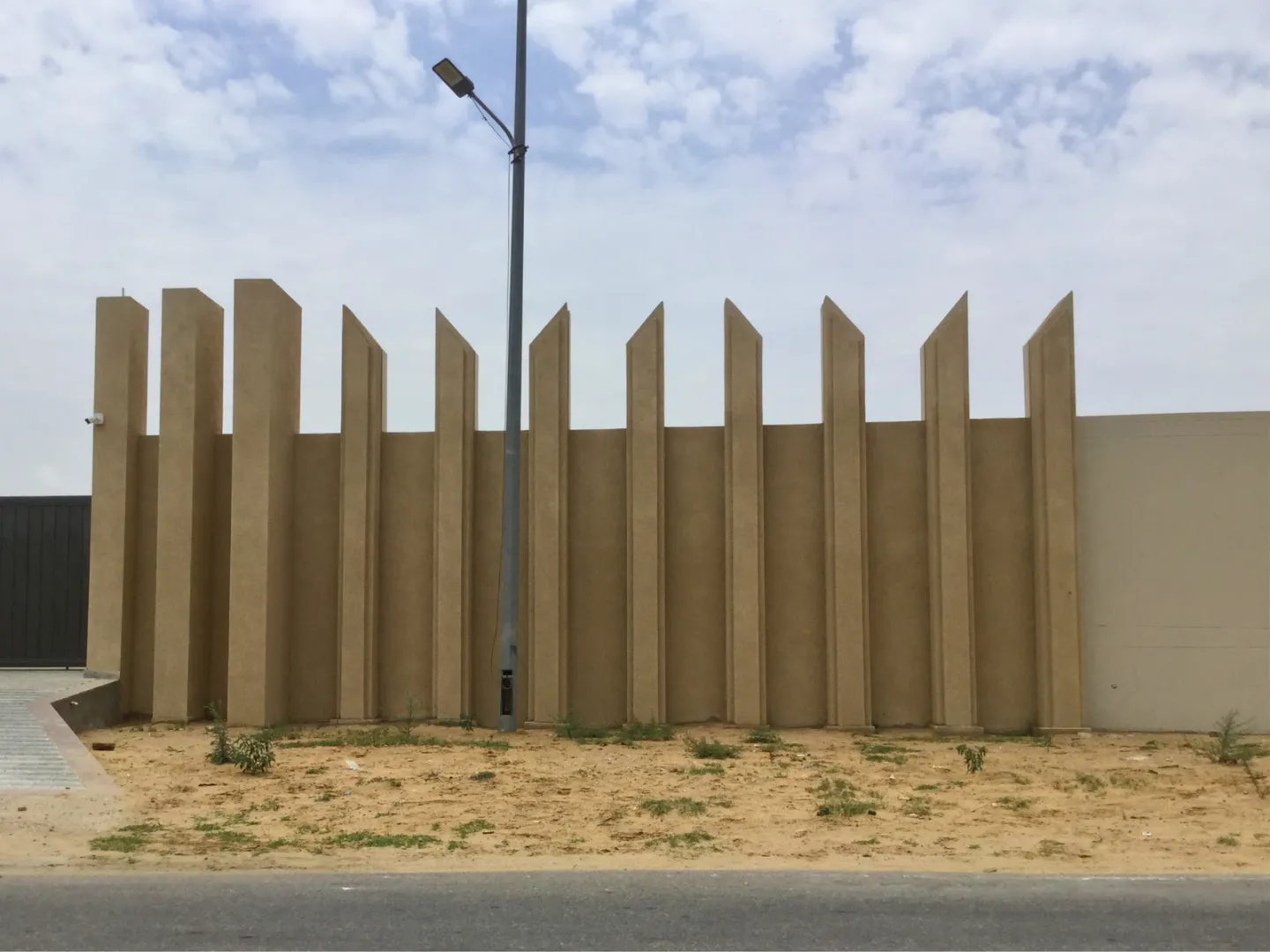
Operating conditions and product evidence
| Input | Evidence to record |
|---|---|
| Air / surface temperature | Measured air records; separate surface assumption and method |
| Orientation / shade / finish | Exposure hours and reflectance or coating data |
| Daily swing / operating mode | Night temperatures; passive / air-conditioned / mixed |
| Rain / humidity / wall layers | Wetting paths, drainage, vents and diffusion paths |
| Movement / UV / maintenance | Product test conditions, manual revision and care schedule |
This is a public-guidance review, not a product test. No family-wide thermal-movement or UV rating is assigned. Record assumed surface temperatures explicitly; do not substitute air temperature.
Colour is an input to verify
Check the finish’s solar properties, exposure and shading when estimating temperature. A dark finish can require different movement and coating checks, but colour alone does not establish the whole wall’s cooling load. Evaluate insulation, glazing and the operating schedule together.
Thermal mass needs an operating scenario
Your Home’s public thermal-mass guidance distinguishes passive cooling from air-conditioned use. For night-purge cooling, verify cooler nights and airflow over exposed mass. In humid climates, shading, interior versus exterior exposure and air-conditioning schedules can change the result. Do not turn “hot-humid” into “no return from mass”. See thermal mass vs insulation.
Separate heat flow, drainage and drying
A cavity does not replace insulation or the weather barrier. Liquid water needs a drainage outlet; cavity ventilation requires a designed airflow path; vapour diffusion drying depends on permeance and indoor/outdoor conditions. Building Science Corporation’s rain-control guidance separates these mechanisms. A barrier wall can have diffusion drying: assess its layers, not only its label.
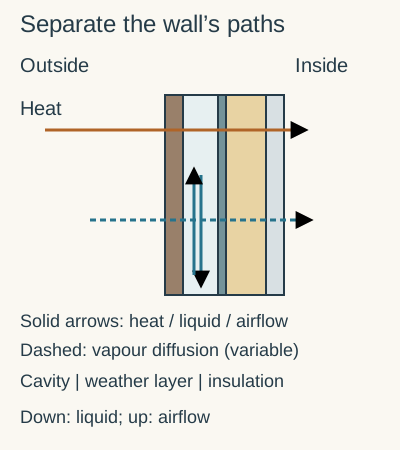
Compare the complete construction in ventilated facade vs direct-applied cladding.
Material evidence comes before category claims
For stone and masonry, confirm support and the role of mass in the assembly. For boards, metal, HPL and other composites, request product temperature, coating and weathering evidence. For timber, record moisture detailing and finish care. For render, verify the background and movement details. Do not assume universal fibre-cement edge sealing or a category-wide UV life.
Fixing and sliding points are system details
EQUITONE’s public US application guide describes fixed and gliding-point sleeves in its Uni-Rivet system to accommodate support-frame movement. This named example is not permission to slot holes in another panel. Hole form, location, edge distance, restraint and fastener compatibility come from the selected system and project design.
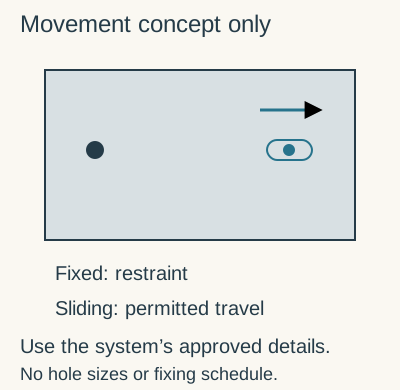
Match sealants, fixings and joints to that system’s movement, temperature and exposure requirements.
Deciding: record the assumptions
Fill the opening record, then note: air range ______; surface range assumed / measured ______; orientation and shade hours ______; operating mode ______; manual revision ______; UV-test conditions ______; maintenance action and interval ______. Confirm fire and moisture requirements for the complete build-up before choosing an option.
Use exterior wall cladding materials compared to record candidates, low-maintenance facade materials to review care requirements, and the facades and exterior design guide for system choices.
Frequently asked questions
Does a light-coloured facade actually make a difference?
Colour is one input to solar absorption, alongside reflectance, shading and exposure. Check the chosen finish’s data and estimated surface temperatures rather than assuming a universal temperature or energy saving.
Hot-dry or hot-humid — does it change the answer?
Yes, but use measured daily temperatures, humidity and operating mode. Exposed mass with cool-night ventilation differs from shaded mass in an air-conditioned building. Hot-humid does not make mass universally useless.
Is a ventilated facade worth it in a hot climate?
A drained and ventilated cavity can support rain control and drying, but check its vents, fire detailing, insulation and moisture-control layers. Neither cooling benefit nor moisture safety follows from the cavity label alone.
Which materials fail fastest in strong sun?
There is no ranking here. Ask for coating or binder weathering evidence, test conditions, temperature limits and maintenance instructions for the exact product and exposure.
Sources
- Thermal mass — Your Home, Australian Government Accessed October 8, 2026.
- BSD-013: Rain Control in Buildings — Building Science Corporation Accessed October 8, 2026.
- Application Guide, Rev. AG-2019-2 — EQUITONE Accessed October 8, 2026.