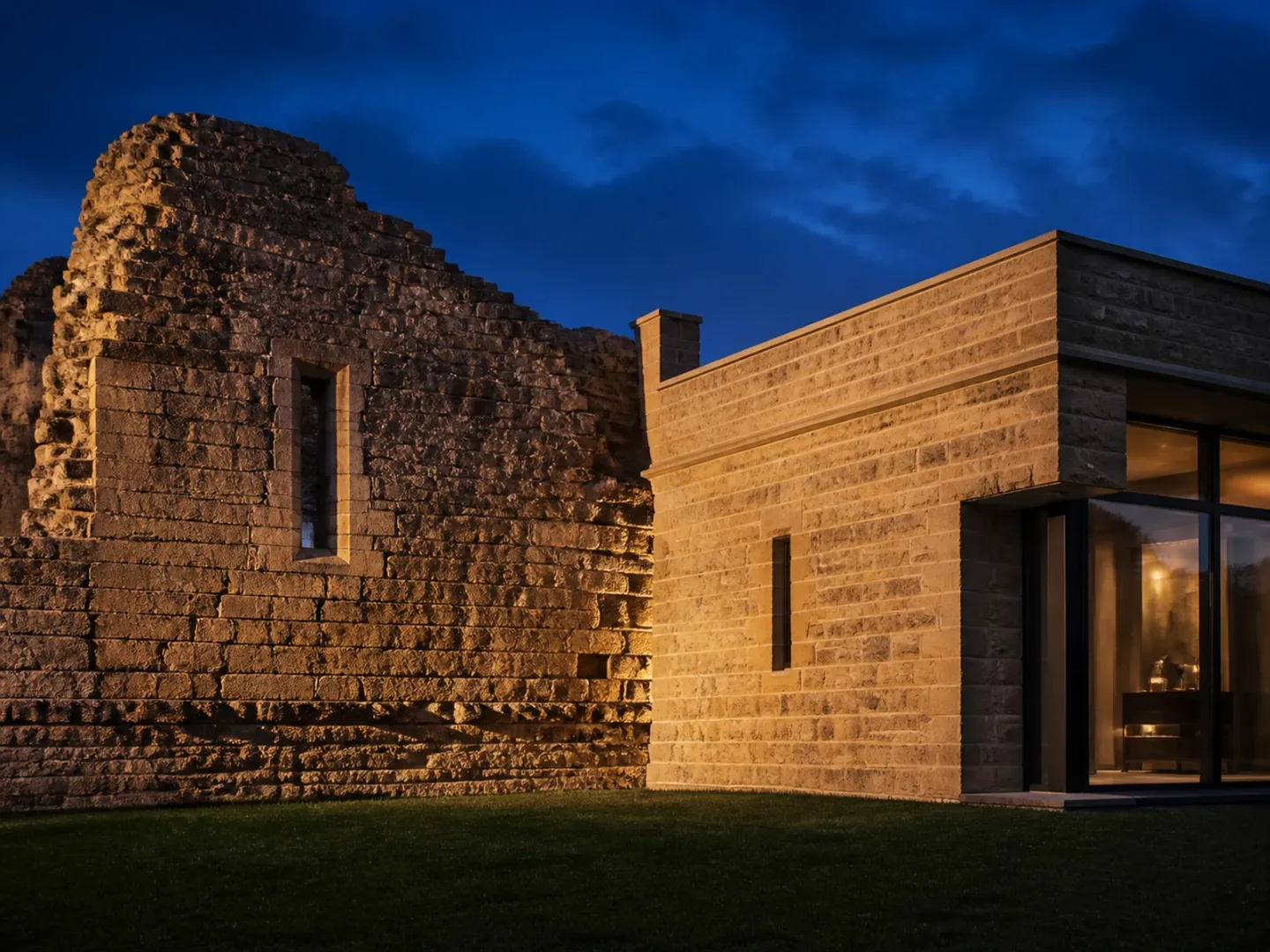
State the intended life first
Most material arguments are unresolvable because the two sides are assuming different building lives. A short fit-out and a long building assessment may justify different choices; neither establishes a universal winner.
So the first move is to write down the intended service life of the building, and of each element within it. Structure, envelope, services and fit-out have different expected lives, and that is normal — but the assumption should be explicit rather than implied.
The four numbers that matter
Service life at this exposure. Not the headline figure — the figure for the orientation, climate, salt load and impact exposure this material will actually experience.
Maintenance interval and action. Cleaning, resealing, recoating, replacement. Each is a different order of cost.
Access cost per cycle. Record the actual safe method, permissions and mobilisation. Height alone does not establish whether access costs dominate.
Replacement granularity. Can one damaged unit be swapped, or does a whole surface come off?
Those four, over a defined period, are the comparison. Purchase price is an input to it, not a substitute for it.
Count replacements separately from carbon
For the assumed 40-year period below, A is installed at year 0 and replaced at years 10, 20 and 30: three replacements, four installations. Do not call that three total material uses. B is installed at year 0 and replaced at year 20: two installations. Neither is replaced at the end boundary, year 40.
Lower carbon requires a separate calculation using comparable EPD declared units, life-cycle stages, quantities and replacement assumptions. Longer life alone does not prove it. See sustainable material selection criteria.
What actually fails
Inspect the whole assembly, including:
- Sealants, past their service life, letting water into assemblies that cannot dry
- Coatings, degraded by UV, no longer protecting what is underneath
- Fixings, specified for a gentler exposure than the one they got
- Drainage paths, blocked, so an assembly designed to drain does not
- Maintenance that never happened, because no budget was allocated
Which means the durable specification includes the fixings, the sealants, the drainage detail and a maintenance plan. A durable material on under-specified fixings is a failed assembly with a good data sheet.
Design moves to price and verify
Compare these design measures with their installation and maintenance consequences:
- Let the assembly dry. A drained, ventilated build-up survives the small failures that will occur, which is a climate decision as much as a material one — see climate-responsive facade strategies.
- Shed water away from surfaces. Check drips, overhangs, sills and copings against actual wetting paths.
- Put impact resistance where needed. Compare the cost of a tougher finish with the proposed repair cycle.
- Check local replacement against the fixing system and removal sequence.
- Design access in. Record the method, responsibility and maintenance budget.
A workable comparison
Assumed purchase-only index: A costs 100 index units per installation and lasts 10 years; B costs 140 and lasts 20 years. Annualised purchase components are 100 ÷ 10 = 10 and 140 ÷ 20 = 7 index units/year. Over the same 40 years, purchases total 400 and 280. This demonstrates a 1.4× price / 2× life example, not actual quotations or total cost. Installation, maintenance, access, disposal, discounting and residual value are excluded here; include them in a full comparison following NIST’s method.
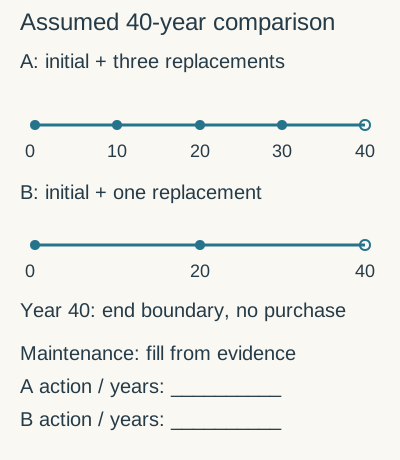
Copy and fill; unknown values stay “unknown”, with a reason.
| Record | A / B |
|---|---|
| Same assessment period / exposure | ______ / ______ |
| Supply + installation / source | ______ / ______ |
| Service life / supporting evidence | ______ / ______ |
| Maintenance action + years | ______ / ______ |
| Access method + cost per event | ______ / ______ |
| Replacement years / removal sequence | ______ / ______ |
| Discount rate / residual value / disposal | ______ / ______ |
| EPD revision / unit / stages | ______ / ______ |
| Cost total / separate carbon total | ______ / ______ |
Where this sits
Life-cycle thinking is applied to the shortlist that survives the hard constraints, not instead of them. For that sequence see how architects select building materials, and for the wider order of environmental leverage see passive design basics and the sustainable and climate-responsive design guide.
Frequently asked questions
Is the most durable material always the right choice?
No. Durability is one criterion among several, and it competes with weight, cost, appearance and buildability. The point is to compare over a defined period rather than at purchase, so the trade is made with the real numbers.
How long should a building last?
State an intended service life and one comparison period for the project. Components may need maintenance or replacement within that period. There is no universal life assumption for every building.
What fails first on a typical building?
Check the cladding, substrate, fixings, coatings, sealants and drainage together. Any can govern failure under a particular exposure; this page does not rank which fails first.
Does life-cycle thinking mean spending more upfront?
Sometimes. Drainage, replacement access and compatible fixings can change quantities, detailing and installation costs. Price the proposed design rather than calling these measures free.
Sources
- Life Cycle Costing Manual, NIST HB 135e2025 — National Institute of Standards and Technology Accessed October 8, 2026.
- EPD Basics: How and Why to Develop an Environmental Product Declaration — U.S. Environmental Protection Agency Accessed October 8, 2026.