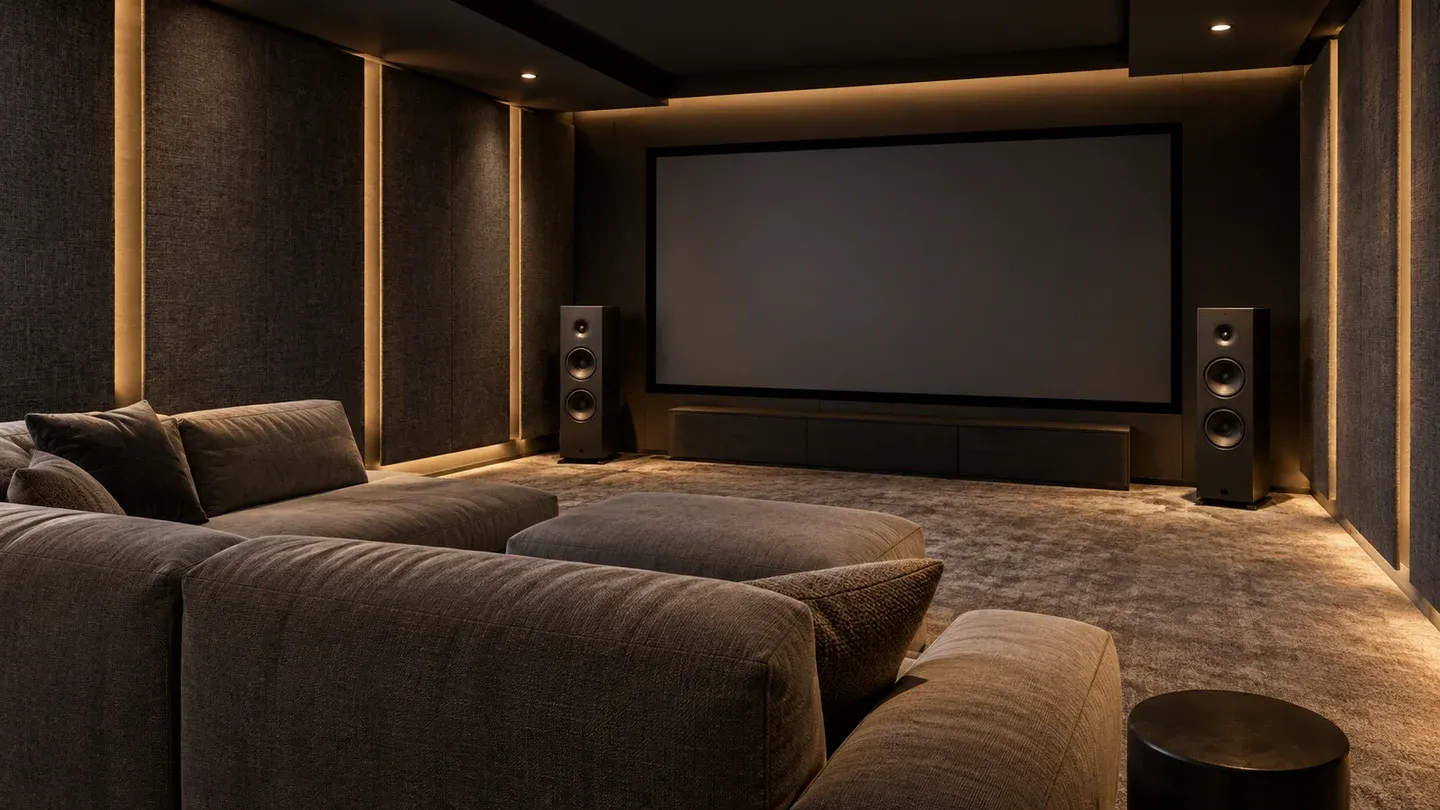
Start your home theater acoustic panels plan with the listening position. Mark the reflection zones, make a separate rear-wall decision, and give bass treatment its own place in the brief.
Thin layers of porous absorbers only reduce high-frequency reflections.
Diffusion is usually not effective at low frequencies.
Use the sequence below to work through your cinema room acoustic panel layout, then bring the finishes together with our interiors guidance.
What should each treatment do?
Absorption reduces or removes the energy of a reflection.
Diffusive panels scatter sound.
Hybrid treatments can be useful when some frequencies should be absorbed while others are reflected or scattered.
Bass traps include everything from very thick panels to diaphragmatic absorbers.
Keep those treatment roles separate on your room plan. Label each proposed treatment by its intended job before choosing its finish.
Locate first reflection point panels from the seat
Reflections arriving soon after direct sound are called early reflections.
Moving furniture or a speaker can greatly change the origin point of a reflection or even block it.
Set out the furniture and loudspeaker positions you intend to use, then work through the mirror procedure.
For the RealTraps stereo reflection-free-zone method, sit in the listening position and have a helper move a mirror flat against the side walls.
Any location where either loudspeaker is visible in the mirror should be covered with absorption.
Treating a larger wall area than the mirror identifies allows some listener movement within the reflection-free zone.
Once the side-wall locations are identified, repeat the process on the ceiling.
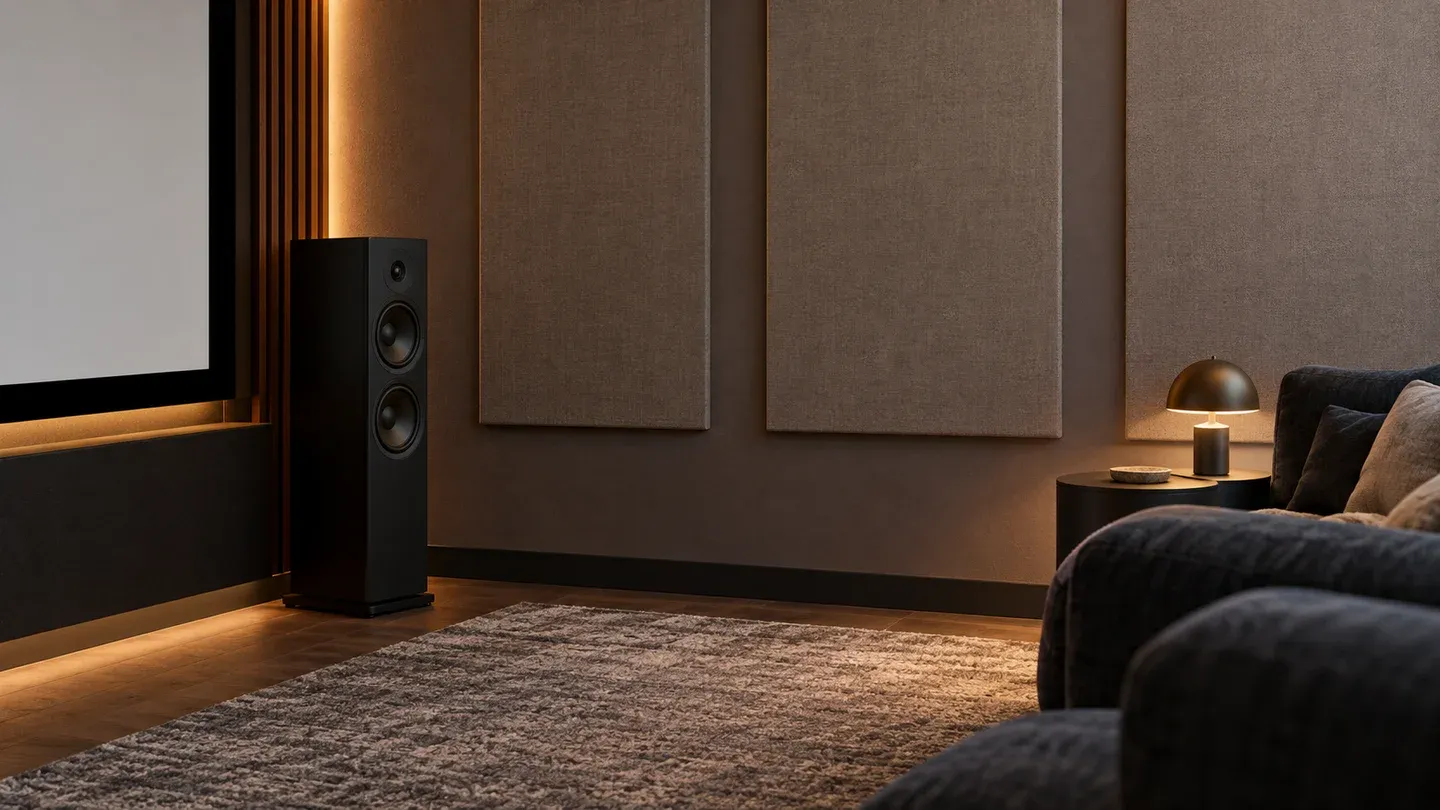
Plan the wall treatment in relation to the listening seat and front loudspeakers.
In the Primacoustic London room kit home theater layout, Control Columns are located on the sides between the loudspeakers and seating area.
Reducing primary side reflections in that layout can make dialogue more intelligible.
In Vicoustic’s high-end listening-room guidance on first reflection points, controlled absorption or hybrid treatment is often more appropriate in smaller rooms or close listening positions.
Mark the proposed treatment areas on your drawing before settling the panel arrangement. Keep the speaker and seating positions on the same drawing for the next review.
Decide what belongs behind the seating
The Home Acoustics Alliance recommends locating diffusors in the rear half of the home theater, particularly between the surround and rear speakers.
Over-absorption reduces diffusiveness by suppressing late reflections along with early ones.
For monitoring rooms, Genelec recommends diffusive and absorbing elements on the back wall if the room is large enough.
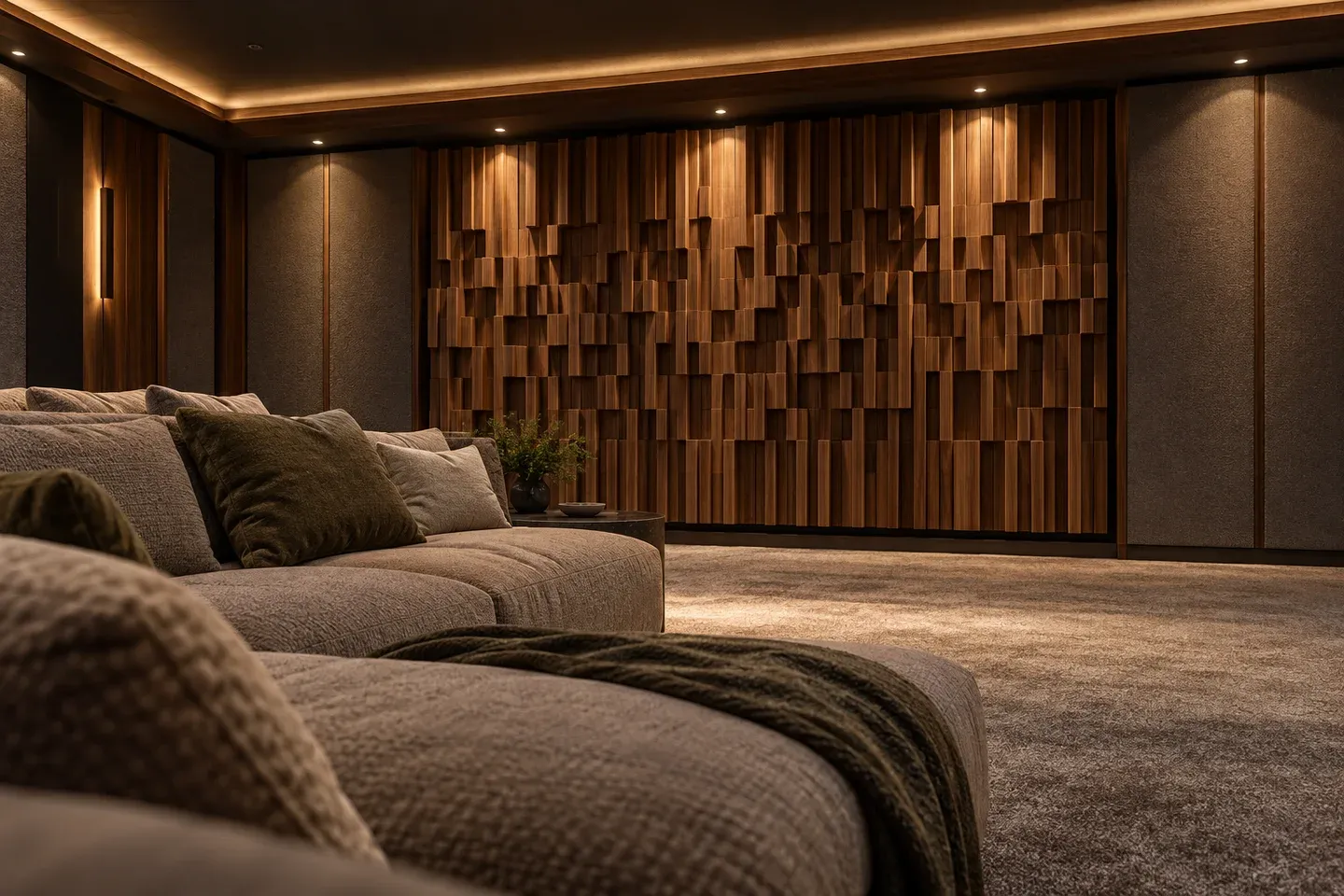
Review the rear-wall treatment together with the seating position.
Check the diffuser’s listening-distance guidance
Use the following named designs as a comparison when reviewing diffuser documentation.
The RealTraps Diffusor Far version has diffusion wells 6 inches deep.
The Far version is recommended when the diffuser is at least six feet away from the listener’s ears.
The RealTraps Diffusor Near model has wells 3 inches deep.
For smaller rooms where the listener is closer, the Near model is more appropriate.
For your proposed rear treatment, record the exact product and its listening-distance guidance next to the seating layout.
Give bass its own treatment decision
A thick layer of material is needed to absorb low frequencies.
Absorbing low frequencies efficiently may require substantial absorbents.
Room modes produce standing wave patterns that reinforce or cancel specific low frequencies depending on listening position.
Bass may sound strong in one seat and weak in another.
Describe the bass problem by seat when preparing your home theater sound absorption brief. Keep that description alongside the proposed treatment and loudspeaker positions.
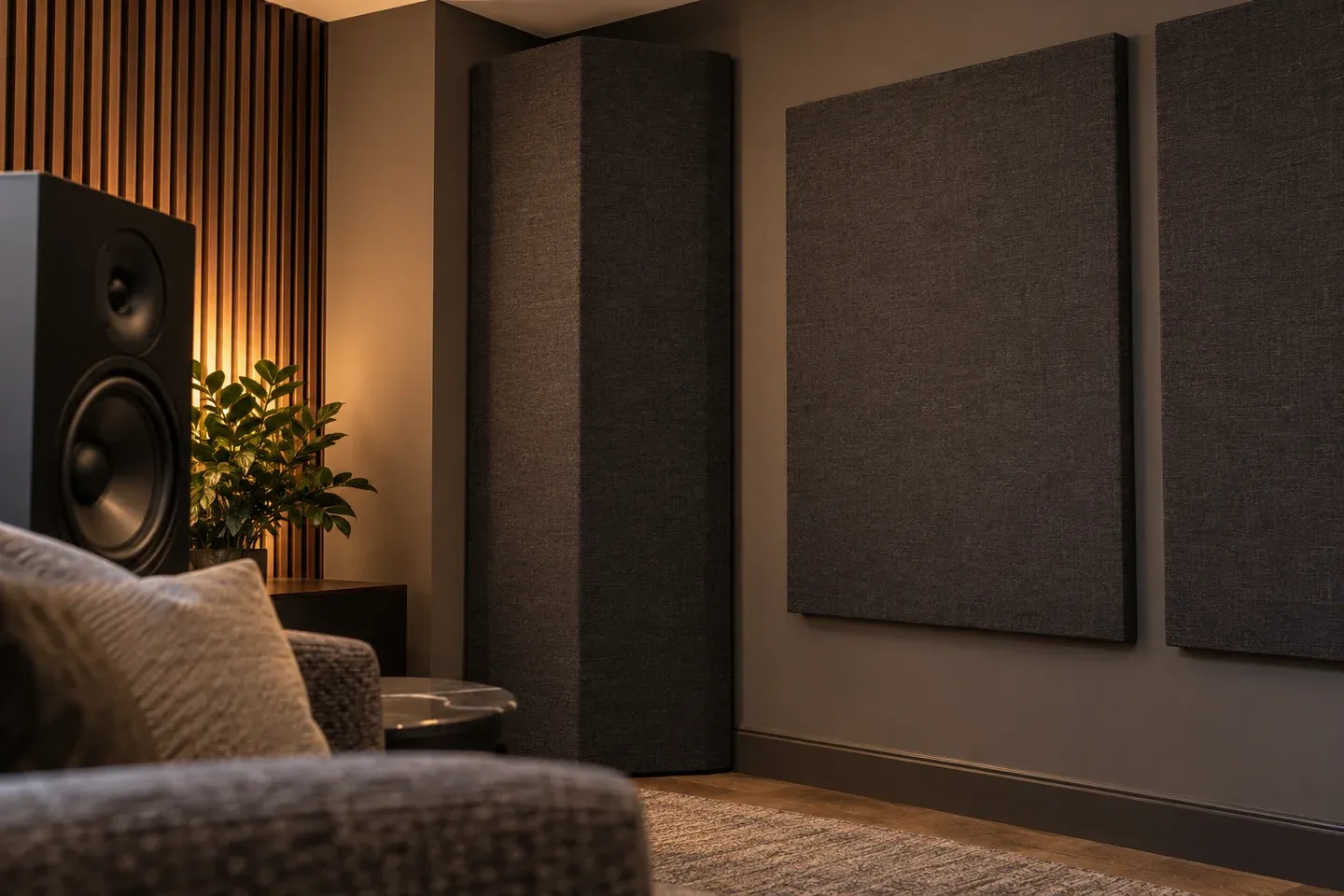
Include the corner treatment in the room layout and finish review.
RealTraps MiniTraps absorb low frequencies best when placed in the room corners.
That MiniTraps placement guidance includes the corner at the top of a wall where it meets the ceiling.
Investigate missing bass as well as excess bass
In Genelec’s discussion of the wall behind a monitor, reflected sound can cancel woofer output, making bass appear too quiet or even missing.
If the loudspeaker output level changes, the reflected sound level also changes.
Record the loudspeaker-to-wall arrangement when documenting missing bass. Review it alongside the listening positions and proposed absorbers.
Use measurement views for the final check
In Room EQ Wizard, the impulse envelope, also called the energy-time curve, is useful to identify reflections.
Each slice of the Room EQ Wizard waterfall plot shows the frequency content of a windowed part of the measurement’s impulse response.
The labels at the sides of the waterfall plot show decay-axis values in time or, for Burst Decay, periods.
The measured impulse response includes the mic/meter and the soundcard.
Keep the measurement setup with the results. Compare the proposed treatment decisions against the reflection and decay views before signing off the room plan.
Bring the layout decisions together
Before choosing the final finish, assemble a room brief with:
- The intended loudspeaker and seating positions.
- The mirror-identified wall and ceiling treatment areas.
- The rear-wall treatment choice and its listening-distance guidance.
- The proposed bass treatment and observations from each listening seat.
- The measurement setup and the reflection and decay views to review.
Return to the interiors collection when coordinating the rest of the room.
Sources
- Home Acoustics Alliance — Acoustical Treatment Primer: Diffusion
- RealTraps — Creating a Reflection-Free Zone
- Primacoustic — London Room Kit Manual
- Genelec — How to Improve Room Acoustics
- RealTraps — Diffusor
- RealTraps — Placing RealTraps
- Vicoustic — High-End Listening-Room Acoustic Treatment
- Room EQ Wizard — Impulse Graph
- Room EQ Wizard — Waterfall Graph